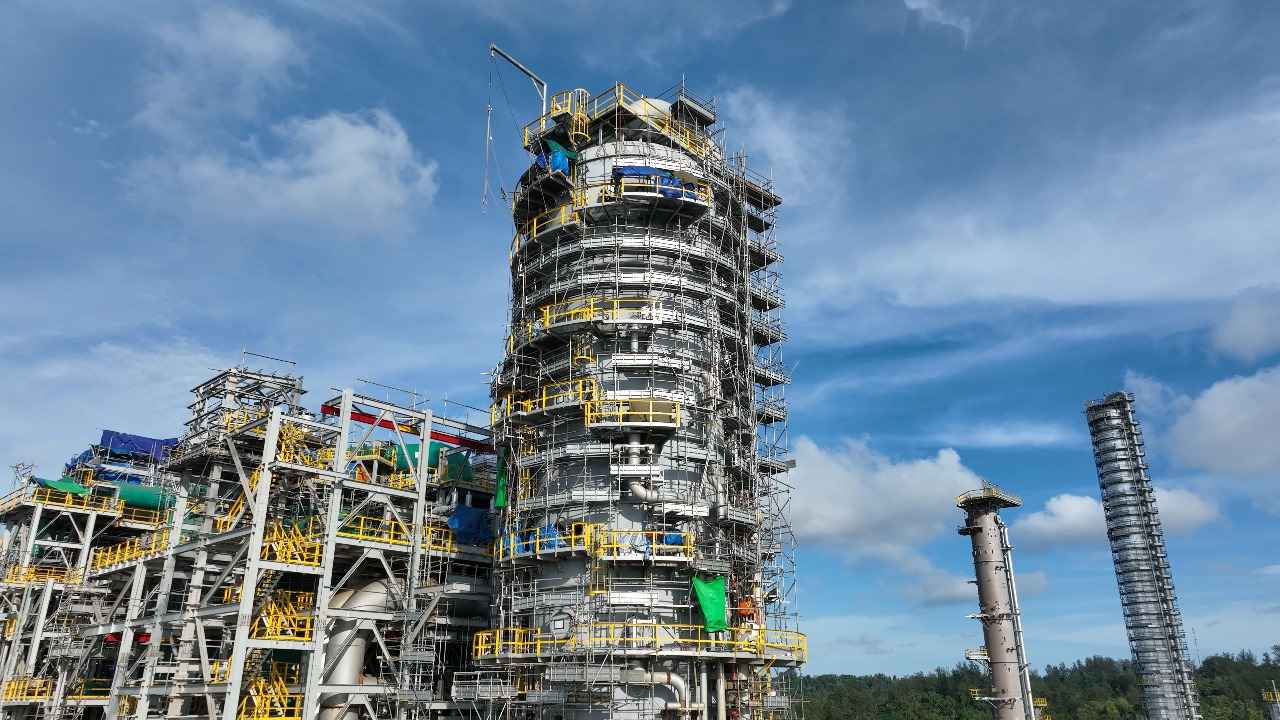
RDMP Balikpapan Expected to Boost Domestic Diesel Supply as Indonesia Sets 2026 Zero-Import Goal
Dec 01, 2025
Similar Article
Indonesia’s Recent Move to Join BRICS: What the Move Means for the Oil and Gas Industry?
Indonesia is now officially a member of BRICS, joining a group of major emerging economies that includes Brazil, Russia, India, China, and South Africa. This milestone has been a long-standing goal of President Prabowo, who has targeted BRICS membership for over a decade. "In 2014, when I started my attempt at running for president of Indonesia, I did announce that when I become president, I will bring Indonesia to join BRICS. I told my foreign minister that it's time to make a significant new element in the global economy," Prabowo said.BRICS, formed in 2009, was designed to boost trade, investment, and global influence among rapidly developing economies while challenging Western-dominated global institutions. The group's focus on economic growth, reducing reliance on the US dollar, and offering alternatives like the BRICS New Development Bank has grown increasingly relevant as global economic power shifts. Recently, BRICS has expanded to include new members like Iran and the United Arab Emirates (UAE), which have strengthened its influence in the global oil market. Together, BRICS now accounts for nearly 41% of global oil production and 35% of oil consumption, with those figures potentially rising if Saudi Arabia joins. At Russian Energy Week in Moscow, BRICS energy ministers discussed energy supply challenges and the possibility of trading outside the US dollar system, further solidifying the group’s growing importance in global energy markets.With its BRICS membership now official, Indonesia stands to gain significant benefits, particularly in the energy sector. Minister of Energy and Mineral Resources, Bahlil Lahadalia, explained that Indonesia could potentially purchase oil from Russia through its new position in BRICS. While Indonesia currently imports oil from the Middle East, some of it could originate from Russia. Bahlil emphasized Indonesia’s active foreign policy, stating that as long as it complies with regulations and benefits the nation, there is no issue with pursuing such opportunities, including engaging with BRICS or other international bodies like the OECD.Luhut Pandjaitan, Chairman of the National Economic Council of Indonesia, highlighted the economic opportunities BRICS membership presents. He noted that Indonesia’s larger market provides new pathways for growth, including better access to energy resources. However, he also warned that Indonesia must be vigilant about the energy challenges currently facing Europe and China, where gas supplies from Russia are being disrupted, which could lead to an energy crisis. Luhut further explained that Indonesia could benefit from cheaper oil prices by engaging with Russia as a BRICS member. "If it benefits our country, we will buy oil from Russia. If we can save $20 or $22 per barrel, why not?" he said.Indonesia's entry into BRICS marks a significant step forward in its foreign policy, aligning the country with some of the world’s fastest-growing economies. This move allows Indonesia to tap into new economic opportunities, particularly in energy markets, and strengthens its position on the global stage. By joining BRICS, Indonesia not only gains access to cheaper oil imports but also becomes a more influential player in shaping global trade and energy strategies. As BRICS continues to challenge Western-dominated systems and shape global economic policies, Indonesia's membership is poised to further its strategic interests in energy security, market expansion, and international cooperation.Written by : Exaudi Abetnego Tampubolon
Emerging Technologies Transforming Oil and Gas Exploration
In today’s world, the oil and gas industry has undergone a significant transformation driven by the adoption of emerging technologies. These Advanced technologies offer oil and gas companies opportunities to optimize operations, boost safety protocols, and increase productivity. With real-time monitoring systems aimed at minimizing equipment failures and state of the art drilling methods, it’s crucial to not only focus on the advantages these innovations provide but also address the challenges and risks that come with their implementation throughout the operations. Technologies are playing a pivotal role across the entire oil and gas value chain upstream, midstream, and downstream. In upstream operations, innovations like Artificial Intelligence (AI) and Machine Learning (ML) are revolutionizing the way companies analyze geological data and locate reserves. Chevron has been at the forefront of adopting AI and machine learning to enhance its oil and gas exploration efforts. By integrating these technologies into its operations, the company uses machine learning algorithms to study seismic data, identifying patterns that predict potential oil and gas reserves with higher precision. One of Chevron’s key advancements is in seismic imaging, where AI-driven tools help generate detailed 3D subsurface models. These models enable geologists to pinpoint optimal drilling locations, significantly reducing the risk of dry wells and saving both time and financial resources. Through the use of AI, Chevron has also shortened the time between data acquisition and actionable insights, making its exploration processes faster and more efficient.Blockchain is making significant strides in the oil and gas industry, particularly within the midstream segment, where it enhances transparency, security, and accountability in supply chain operations. Shell has taken a leading role in implementing blockchain technology, through the use of blockchain, shell is able to track and verify the movement of raw materials, equipment, and products across various stages of its supply chain. One key feature of Shell’s blockchain adoption is its ability to automate transactions using smart contracts. These digital contracts execute automatically when predefined conditions are met, which simplifies complex regulatory and compliance requirements. This automation helps Shell to maintain a high level of transparency and reduces the potential for human error, thus making the process more efficient and secure. The technology not only improves the tracking of physical materials but also enhances accountability and trust among stakeholders like suppliers, regulators, and customers.In the downstream sector, ExxonMobil is leading the way in refining process automation, utilizing advanced technologies like Distributed Control Systems (DCS) and Advanced Process Control (APC) to enhance efficiency and product quality across its global refining operations. By integrating AI-driven models and predictive maintenance strategies, ExxonMobil can optimize critical process parameters, reduce energy consumption, and minimize unplanned downtime. Their adoption of digital twin technology allows for real-time simulations of refining processes, enabling better decision-making and process adjustments without interrupting production. This commitment to digital transformation not only boosts operational performance but also supports a more sustainable and reliable energy supply chain.In conclusion, the integration of advanced technologies like AI, blockchain, and automation is revolutionizing the oil and gas industry across upstream, midstream, and downstream operations. These innovations enable companies such as chevron, shell, and exxonmobil to optimize processes, enhance efficiency, and improve safety while addressing the challenges that come with technological transformation. By embracing digital tools like predictive maintenance, smart contracts, and digital twins, the industry can achieve greater sustainability and reliability, positioning itself for continued success in an increasingly competitive and environmentally conscious market.
SPE ITS SC Empowers Students Through ONG 101 Seminar with Insights from KUFPEC Engineer Ir. Zulfikar A. Ali
On October 25th, 2025, the Society of Petroleum Engineers ITS Student Chapter (SPE ITS SC) successfully held ONG 101, an insightful seminar that brought students closer to the real challenges and opportunities within the oil and gas industry. Held at Teater A, Institut Teknologi Sepuluh Nopember (ITS) Surabaya, the seminar featured Ir. Zulfikar A. Ali, IPM, Senior Completion and Fracturing Engineer at KUFPEC and ITS Chemical Engineering alumnus, as the keynote speaker. In his opening presentation, Mr. Zulfikar emphasized that safety remains the foremost priority in every stage of oil and gas operations. He explained that the strict regulatory frameworks governing exploration, drilling, and production activities are designed to prevent accidents, mitigate risks associated with H₂S gas exposure, and minimize environmental incidents such as oil spills. According to him, adherence to safety standards is a non-negotiable aspect of engineering professionalism, reflecting the industry's ethical responsibility toward both personnel and the environment. The speaker proceeded to share his personal experiences working across various segments of the oil and gas value chain. He reflected on the challenges and learning processes that shaped his career, encouraging students to pursue their passion with perseverance and integrity. Addressing the growing public perception that the oil and gas industry is a declining sector, Mr. Zulfikar remarked: “Some people say, ‘Oil is running out, why study petroleum engineering?’ But I believe hydrocarbons will still be needed for the next 100 years. Oil and gas will continue to support the world’s energy demand. It will remain part of our journey to achieve global energy targets.” This statement underscored the continuing relevance of Oil and Gas exploration and innovation within the broader context of energy transition and sustainability. While the global energy landscape is shifting toward renewable resources, hydrocarbons will remain essential for industrial processes, petrochemicals, and transitional energy sources in the decades to come. In the technical portion of the session, Mr. Zulfikar elaborated on the cycle of oil and gas operations, covering exploration, drilling, completion, production, and decommissioning. He introduced the concepts of primary, secondary, and tertiary recovery, in which the industry has now reached tertiary recovery. This emphasizes the importance of continuous innovation to improve recovery efficiency and resource sustainability. He highlighted the necessity of “honoring technology” by embracing advancements that enable engineers to address contemporary challenges such as reservoir depletion, environmental impact reduction, and cost optimization. Topics discussed included offshore exploration wells, structural integrity, station-keeping systems, and drill stem testing all of which require interdisciplinary collaboration and robust engineering design. The seminar’s central theme, well-completion, was explored in depth. Mr. Zulfikar discussed the primary challenges faced by completion engineers, particularly in corrosive well environments, where material selection becomes a critical factor. He also addressed the requirements for materials capable of withstanding the extremely low temperatures associated with Carbon Capture and Storage (CCS) operations, an emerging field aligned with global decarbonization goals. Various artificial lift systems were introduced as solutions for enhancing production from mature wells. Furthermore, the speaker noted that multilateral well technology, though not yet widely implemented in Indonesia, presents significant opportunities for improving reservoir drainage efficiency. Mr. Zulfikar also explained several methods to mitigate sand production, such as gravel packing and screen design, emphasizing that these practices are vital for maintaining well integrity. He concluded this section by introducing smart well technologies, which enable remote monitoring and control to minimize the need for physical intervention, thereby enhancing both safety and efficiency. Beyond technical competence, Mr. Zulfikar stressed that successful engineering practice in the oil and gas industry depends on effective collaboration among diverse disciplines. Such multidisciplinary cooperation fosters innovative problem-solving and ensures that complex projects meet both operational and environmental standards. The event’s interactive segments demonstrated the enthusiasm of ITS students. The QnA session featured insightful discussions that reflected participants’ curiosity and critical thinking regarding industry practices. The seminar concluded with a PetroQuiz, in which attendees enthusiastically competed to answer technical questions related to the material presented. This activity effectively reinforced the participants’ understanding while maintaining an engaging atmosphere. Through ONG 101, SPE ITS SC successfully bridged academic learning with real-world industry perspectives. The seminar provided valuable exposure to practical engineering challenges and the evolving dynamics of the global energy sector. By presenting both motivational insights and technical expertise, Ir. Zulfikar A. Ali, IPM, not only broadened the participants’ understanding of well completion and production technologies but also inspired them to uphold professional values of safety, innovation, and collaboration.
Writer: Christya Amanda
From Tragedy to Reform: The Impact of Deepwater Horizon on HSE
The importance of Health, Safety, and Environment (HSE) in the oil and gas industry cannot be overstated, as it plays a critical role in ensuring the safety of workers, the integrity of operations, and the protection of the environment. The tragic Deepwater Horizon disaster of 2010 starkly underscores the dire consequences of neglecting HSE protocols. This catastrophic event, which resulted in the loss of 11 lives and the largest marine oil spill in history, serves as a grim reminder of the inherent risks in oil and gas operations. The explosion on the Deepwater Horizon rig highlighted several key failings, including insufficient risk management, inadequate safety measures, and a lack of proper emergency response protocols. These oversights not only led to significant human and environmental losses but also inflicted severe financial and reputational damage on the companies involved. In the aftermath of the disaster, there has been a renewed emphasis on HSE standards across the industry. Companies have been compelled to adopt more rigorous safety protocols, invest in advanced technology for monitoring and prevention, and foster a culture of safety and environmental stewardship. Effective HSE practices involve comprehensive risk assessments, regular safety drills, continuous training for employees, and stringent adherence to regulatory standards. Moreover, the integration of cutting-edge technology, such as real-time monitoring systems and automated shut-off mechanisms, has become essential in mitigating risks. The lessons learned from Deepwater Horizon have driven home the need for a proactive approach to HSE, emphasizing the importance of preventive measures over reactive responses. Ensuring the health and safety of workers, protecting the environment from the potentially devastating impacts of oil spills and other accidents, and maintaining operational integrity are now seen as fundamental to the success and sustainability of oil and gas operations. In conclusion, the Deepwater Horizon incident serves as a pivotal case study in the critical importance of robust HSE practices in the oil and gas industry, illustrating that prioritizing safety and environmental protection is not only a moral and legal obligation but also a business imperative.