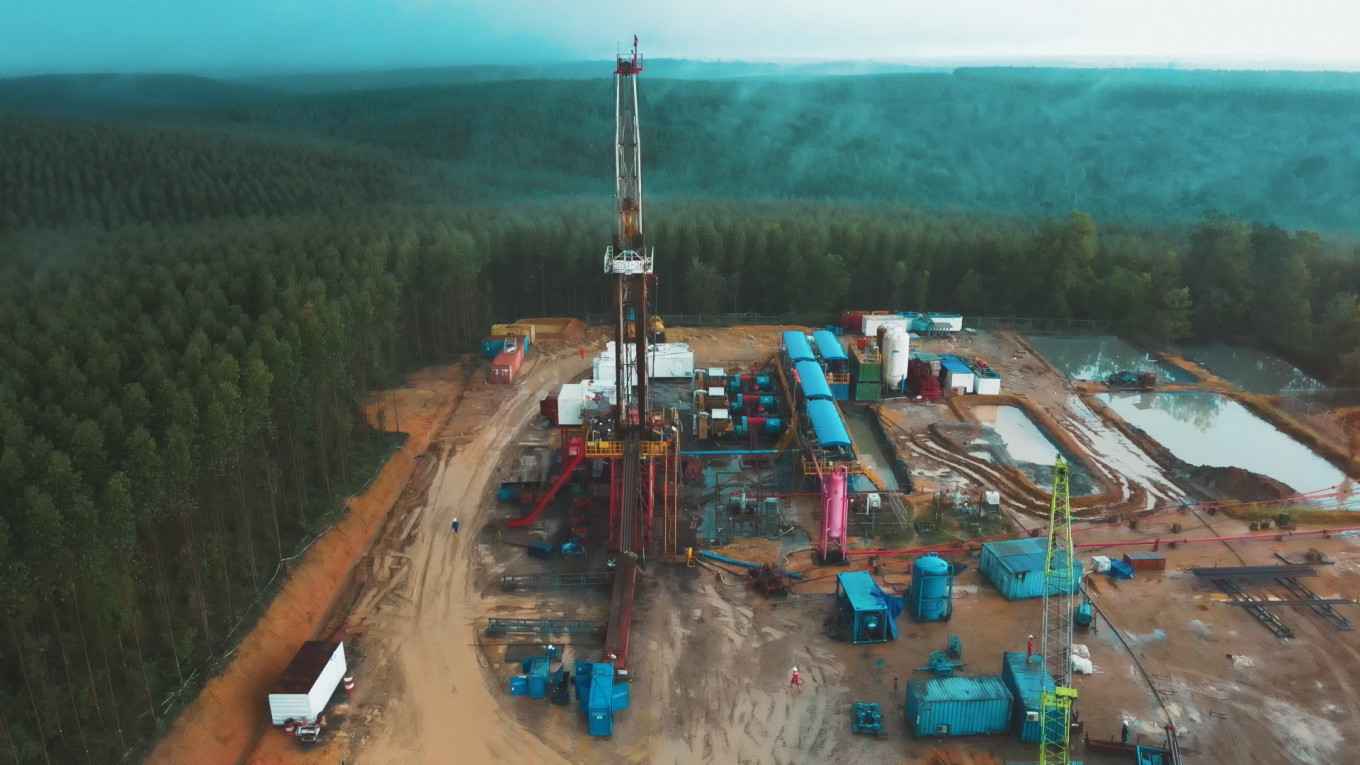
PetroChina’s Gemah-81 Well Delivers 4.8 MMscfd in Strong Initial Production Test
Feb 22, 2026
Similar Article
Exploring Material Management in Oil and Gas through PHE WMO Shorebase Visit
Enhancing the knowledge of SPE’s Board of Committee about materials used in the oil and gas industry, Company Visit Division SPE ITS SC conducted Inspect 3.0. The event was held in Pertamina Hulu Energi West Madura Offshore (PHE WMO) Lamongan Shorebase and involved a site visit, presentation, and discussion about the industry.Inspect 3.0 that has been conducted on 14th April is a series of company visit events and in this stewardship, visiting PHE WMO became the third company visit that has been conducted. PHE WMO is a subsidiary of PT Pertamina Hulu Energi (PHE), a subsidiary of PT Pertamina (Persero). PHE WMO primary focus is on exploration and production, but it also has a logistics base in Lamongan, which is crucial for the success of its operations. The PIC of the event Abdulah Abraham Abror explained, company visit this time provided an opportunity for the students to see and visit the shorebase/warehouse under oil and gas-based companies related to the core values of SPE ITS SC. “Through the visit and discussion with the company representative, the students gained insights into the oil and gas industry and how the company worked,” Abror added.More specifically, Abror said this event aims to provide knowledge about the materials used in the oil and gas industry, understand material management and handling processes, as well as introduce students to professions observed in the operating environment. “The event also discussed the end-to-end process of delivery material, including material management and how to handle it safely,” Abror explained.According to Abror, the event started with a safety induction by PHE WMO, followed by an introduction from SPE ITS SC. The opening was then given by PHE WMO, which provided an overview of the company and their role in the shorebase/warehouse. Representative from PHE WMO explained, shorebase management makes remote oil and gas operations more easily managed logistically from nearby ports. Furthermore, the role of shorebase as a support for offshore activities can take the form of a port, warehouse, field, or office. In upstream oil and gas activities, starting from exploration, production, transportation to the refinery, and selling of oil or gas, shorebase is needed. Equipment such as casing and tubing require a long time to order, so supply chain management planning is needed.
After the introduction, the event proceeded to the site visit. The site visit involved observing the drilling equipment, such as drill bits, various sizes of drill pipes, christmas tree, and other equipments required for drilling process. A discussion of oil and gas from both parties was conducted to exchange knowledge and ideas. “During the visit, the students had the opportunity to ask questions and discuss with the representatives,” Abror added.Quoting one of the participants in the event, said Inspect 3.0 has been a great learning opportunity for me. He has gained valuable knowledge about the oil and gas industry, especially the materials and equipment used in the drilling process. "The visit to the Lamongan Shorebase has given me a real-life experience that cannot be gained through theory alone," he said.The event was successful in achieving its objectives, and the participants gained valuable insights into the oil and gas industry. The event was an excellent opportunity for the students to enhance their knowledge, and it was hoped that it would help them to become more competent professionals in the industry. “This event is expected to strengthen the relationship between SPE ITS SC and the oil and gas companies, including PHE WMO,” Abror concluded. By: Tyara Novia
Indonesia to Begin Construction of Dumai-Sei Mangkei Gas Pipeline Network in 2025
The Dumai-Sei Mangkei gas pipeline project is a major infrastructure initiative in Indonesia, spanning approximately 428 then extended to 555 kilometers from Dumai in Riau to the Sei Mangkei Special Economic Zone (SEZ) in North Sumatra. Designed to bolster the industrial sector in Sumatra, the pipeline is expected to have a substantial transport capacity to meet growing energy demands, delivering up to 400 million standard cubic feet of gas per day (MMSCFD). The project is estimated to cost around Rp 7.8 trillion (approximately USD 500 million) and involves collaboration between state-owned enterprises and private sector stakeholders under the guidance of Indonesia’s Ministry of Energy and Mineral Resources (ESDM). The Dumai-Sei Mangkei gas pipeline is a strategically important project for Indonesia, which is essential for moving natural gas safely and efficiently from upstream production sites to downstream users, including industrial hubs and distribution networks. By providing a steady and reliable source of natural gas to the region, the pipeline supports industries across Sumatra, particularly in the Sei Mangkei Special Economic Zone (SEZ), a key industrial hub aimed at accelerating economic growth and job creation. Minister of Energy and Mineral Resources (ESDM) Arifin Tasrif said the completion of the Dumai - Sei Mangke gas pipeline project is part of efforts to anticipate excess natural gas, where there is a large gas potential in the Andaman Sea. Thus, it will be utilized for industries that need natural gas. Andaman Sea itself, known to have the promising hydrocarbon reservoirs waiting to be deciphered by experts around the world. The distribution takes the form of pockmarks, diapir, gas chimneys, and mud volcanoes governed by factors such as the presence of gas pockets, hydrocarbon reserves, fluid seepages, fumarolic activity, and gas hydrate occurrences within the sedimentary layers.The Dumai-Sei Mangkei gas pipeline is poised to deliver substantial economic and industrial benefits, creating numerous job opportunities during both its construction and operational phases. This influx of employment is expected to drive economic growth in the region, supporting local businesses and stimulating surrounding economies. Additionally, the Dumai-Sei Mangkei project could contribute to reducing the LPG 3 kg subsidy by an estimated Rp 420 billion per year, achieving a cost saving of Rp 107 billion annually, and generating foreign exchange savings of up to Rp 720 billion per year. The pipeline is also expected to yield substantial revenue for the government, with potential annual state revenue of Rp 1.89 trillion and Rp 12 billion from regulatory fees to BPH Migas. The Dumai-Sei Mangkei gas pipeline project represents a crucial investment in Indonesia’s energy and economic future. Set to begin construction in 2025 and targeted for completion by 2027. With substantial support from the Ministry of Energy and Mineral Resources, the Dumai-Sei Mangkei pipeline stands to enhance local economies, stabilize gas prices, and contribute an estimated Rp 1.89 trillion in annual state revenue, marking a transformative step forward for Indonesia’s energy infrastructure and industrial development.
Emerging Technologies Transforming Oil and Gas Exploration
In today’s world, the oil and gas industry has undergone a significant transformation driven by the adoption of emerging technologies. These Advanced technologies offer oil and gas companies opportunities to optimize operations, boost safety protocols, and increase productivity. With real-time monitoring systems aimed at minimizing equipment failures and state of the art drilling methods, it’s crucial to not only focus on the advantages these innovations provide but also address the challenges and risks that come with their implementation throughout the operations. Technologies are playing a pivotal role across the entire oil and gas value chain upstream, midstream, and downstream. In upstream operations, innovations like Artificial Intelligence (AI) and Machine Learning (ML) are revolutionizing the way companies analyze geological data and locate reserves. Chevron has been at the forefront of adopting AI and machine learning to enhance its oil and gas exploration efforts. By integrating these technologies into its operations, the company uses machine learning algorithms to study seismic data, identifying patterns that predict potential oil and gas reserves with higher precision. One of Chevron’s key advancements is in seismic imaging, where AI-driven tools help generate detailed 3D subsurface models. These models enable geologists to pinpoint optimal drilling locations, significantly reducing the risk of dry wells and saving both time and financial resources. Through the use of AI, Chevron has also shortened the time between data acquisition and actionable insights, making its exploration processes faster and more efficient.Blockchain is making significant strides in the oil and gas industry, particularly within the midstream segment, where it enhances transparency, security, and accountability in supply chain operations. Shell has taken a leading role in implementing blockchain technology, through the use of blockchain, shell is able to track and verify the movement of raw materials, equipment, and products across various stages of its supply chain. One key feature of Shell’s blockchain adoption is its ability to automate transactions using smart contracts. These digital contracts execute automatically when predefined conditions are met, which simplifies complex regulatory and compliance requirements. This automation helps Shell to maintain a high level of transparency and reduces the potential for human error, thus making the process more efficient and secure. The technology not only improves the tracking of physical materials but also enhances accountability and trust among stakeholders like suppliers, regulators, and customers.In the downstream sector, ExxonMobil is leading the way in refining process automation, utilizing advanced technologies like Distributed Control Systems (DCS) and Advanced Process Control (APC) to enhance efficiency and product quality across its global refining operations. By integrating AI-driven models and predictive maintenance strategies, ExxonMobil can optimize critical process parameters, reduce energy consumption, and minimize unplanned downtime. Their adoption of digital twin technology allows for real-time simulations of refining processes, enabling better decision-making and process adjustments without interrupting production. This commitment to digital transformation not only boosts operational performance but also supports a more sustainable and reliable energy supply chain.In conclusion, the integration of advanced technologies like AI, blockchain, and automation is revolutionizing the oil and gas industry across upstream, midstream, and downstream operations. These innovations enable companies such as chevron, shell, and exxonmobil to optimize processes, enhance efficiency, and improve safety while addressing the challenges that come with technological transformation. By embracing digital tools like predictive maintenance, smart contracts, and digital twins, the industry can achieve greater sustainability and reliability, positioning itself for continued success in an increasingly competitive and environmentally conscious market.
PHM Accelerates Gas Production with 20 MMSCFD Boost from New Mahakam Platform
Indonesia's energy landscape received a significant lift as Pertamina Hulu Mahakam (PHM) launched Platform WPN-7, boosting gas production by 20 million standard cubic feet per day (MMSCFD) in the Mahakam Block. This achievement underscores ongoing efforts to secure national gas supplies amid rising demands.Located offshore in East Kalimantan's mature Sisi Nubi field, WPN-7 went operational on March 23, 2026. It features two key wells: NB-701, which began flowing at 9.8 MMSCFD on March 25, and NB-702, achieving 12.5 MMSCFD by March 26. Together, they target a combined initial output of 20 MMSCFD, with PHM actively monitoring to stabilize and optimize performance in line with Q1 2026 objectives.This platform represents the third in the Sisi Nubi Area of Interest (SNB AOI) 1-3-5 project. Predecessors include WPS-4, activated December 4, 2025, and WPS-5 on February 23, 2026. These phased developments build on rigorous technical groundwork, revitalizing output from the longstanding Mahakam Block, a cornerstone of Indonesia's upstream sector.The boost aligns with broader national strategies, enhancing energy resilience. PHM's initiatives complement prior Mahakam projects that added substantial capacities, like up to 36 MMSCFD, supporting SKK Migas targets for oil and gas stability."These new wells play a vital role in ensuring steady gas availability and strengthening our upstream self-sufficiency goals," said PHM General Manager Setyo. As Indonesia navigates energy transitions, such milestones from mature fields like Mahakam remain crucial for economic and supply security into 2026 and beyond.
Written by: Christya