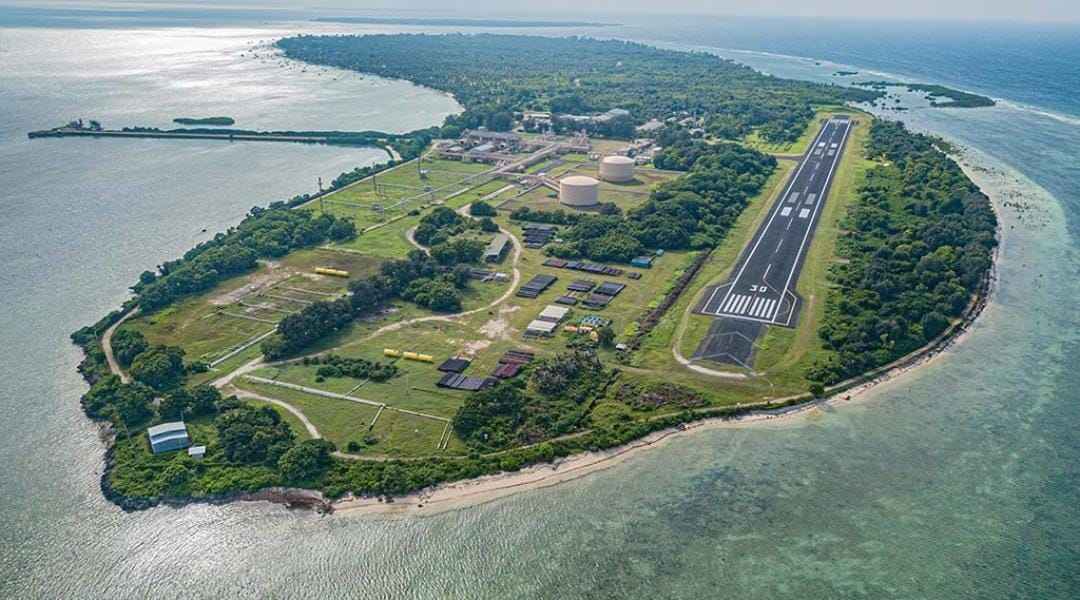
Kangean Energy to Conduct 3D Seismic Survey in East Java; SKK Migas Emphasizes Subsurface Data as Pillar of National Energy Security
Nov 26, 2025
Similar Article
SPEak Up! CCUS: Remarkable to Support Emission Reduction
The Society of Petroleum Engineers (SPE) ITS SC held a guest lecture program called SPEak Up! Guest Lecture in collaboration with SPE UTM SC from Malaysia and SPE PSU SC from the Philippines. The program aimed to increase the understanding of the members of the three SPE’s regarding the perspective of the oil and gas industry in the energy transition era.
SPEak Up! Guest Lecture is an annual event that developed by Academia and Competency Development Department SPE ITS SC. This year, SPEak Up! brought the theme regarding the perspective of the oil and gas industry in the energy transition era. One interesting topic was "CCUS as a Remarkable Solution to Support Emission Reduction" presented by Mutia Khairunnisa Mardhatillah.Mutia Khairunnisa Mardhatillah is a graduate student from the PETRONAS University of Technology majoring in Petroleum Engineering at the master's degree. Currently she is a Researcher Assistant in the field of carbon capture and storage (CCS) at PETRONAS University of Technology. Also, currently she is working on his dissertation focused on the CO2-Brine-Rock Interactions during sequestration in Saline Aquifer. The observations are on the near-wellbore vicinity and the consequences from the interactions are analyzed.In her presentation, Mutia said that currently, our world is experiencing a significant increase in the earth's temperature from year to year which is experienced by the large number of greenhouse gas emissions, especially CO2 that rises into the atmosphere. That way, there needs to be a step to prevent it.there are many ways that can be done to reduce greenhouse gas emissions, such as the use of renewable energy, methane reduction, alternative fuels, etc. However, in this case there is one way that is often discussed at this time, that is CCUS.CCUS stands for Carbon Capture, Utilization, and Storage. It refers to a set of technologies and processes aimed at reducing carbon dioxide emissions from industrial processes and power generation. Carbon capture involves capturing carbon dioxide emissions from sources such as power plants, factories, and other industrial processes. Utilization involves finding ways to use the captured carbon dioxide, for example, in the production of chemicals, fuels, or building materials. Storage involves storing the captured carbon dioxide in underground geological formations, such as depleted oil and gas reservoirs or saline aquifers, so that it does not enter the atmosphere. CCUS is seen as a promising approach to reducing greenhouse gas emissions and mitigating climate change, as it allows for continued use of fossil fuels while reducing their environmental impact.“CCUS consists of 4 stages, namely Carbon Capture, Transport, Utilization, and Storage. In the carbon capture stage, CO2 released into the atmosphere will be captured from fuel combustion or industrial processes. Furthermore, at the transport stage, CO2 will be transported via a ship or pipeline. After CO2 is transported, there is a utilization stage where it can either be used as a resource to create valuable products or services, but it doesn't stop at that stage, CO2 can also be injected into underground geological formations for the storage stage.” Mutia said. However, there are still several obstacles in its application, such as high cost, regulatory framework, and public acceptance. For this reason, Mutia hopes that companies that will later apply this technology and the government can work together with the surrounding community for the implementation of this CCUS technology.
SPE ITS SC Empowers Students Through ONG 101 Seminar with Insights from KUFPEC Engineer Ir. Zulfikar A. Ali
On October 25th, 2025, the Society of Petroleum Engineers ITS Student Chapter (SPE ITS SC) successfully held ONG 101, an insightful seminar that brought students closer to the real challenges and opportunities within the oil and gas industry. Held at Teater A, Institut Teknologi Sepuluh Nopember (ITS) Surabaya, the seminar featured Ir. Zulfikar A. Ali, IPM, Senior Completion and Fracturing Engineer at KUFPEC and ITS Chemical Engineering alumnus, as the keynote speaker. In his opening presentation, Mr. Zulfikar emphasized that safety remains the foremost priority in every stage of oil and gas operations. He explained that the strict regulatory frameworks governing exploration, drilling, and production activities are designed to prevent accidents, mitigate risks associated with H₂S gas exposure, and minimize environmental incidents such as oil spills. According to him, adherence to safety standards is a non-negotiable aspect of engineering professionalism, reflecting the industry's ethical responsibility toward both personnel and the environment. The speaker proceeded to share his personal experiences working across various segments of the oil and gas value chain. He reflected on the challenges and learning processes that shaped his career, encouraging students to pursue their passion with perseverance and integrity. Addressing the growing public perception that the oil and gas industry is a declining sector, Mr. Zulfikar remarked: “Some people say, ‘Oil is running out, why study petroleum engineering?’ But I believe hydrocarbons will still be needed for the next 100 years. Oil and gas will continue to support the world’s energy demand. It will remain part of our journey to achieve global energy targets.” This statement underscored the continuing relevance of Oil and Gas exploration and innovation within the broader context of energy transition and sustainability. While the global energy landscape is shifting toward renewable resources, hydrocarbons will remain essential for industrial processes, petrochemicals, and transitional energy sources in the decades to come. In the technical portion of the session, Mr. Zulfikar elaborated on the cycle of oil and gas operations, covering exploration, drilling, completion, production, and decommissioning. He introduced the concepts of primary, secondary, and tertiary recovery, in which the industry has now reached tertiary recovery. This emphasizes the importance of continuous innovation to improve recovery efficiency and resource sustainability. He highlighted the necessity of “honoring technology” by embracing advancements that enable engineers to address contemporary challenges such as reservoir depletion, environmental impact reduction, and cost optimization. Topics discussed included offshore exploration wells, structural integrity, station-keeping systems, and drill stem testing all of which require interdisciplinary collaboration and robust engineering design. The seminar’s central theme, well-completion, was explored in depth. Mr. Zulfikar discussed the primary challenges faced by completion engineers, particularly in corrosive well environments, where material selection becomes a critical factor. He also addressed the requirements for materials capable of withstanding the extremely low temperatures associated with Carbon Capture and Storage (CCS) operations, an emerging field aligned with global decarbonization goals. Various artificial lift systems were introduced as solutions for enhancing production from mature wells. Furthermore, the speaker noted that multilateral well technology, though not yet widely implemented in Indonesia, presents significant opportunities for improving reservoir drainage efficiency. Mr. Zulfikar also explained several methods to mitigate sand production, such as gravel packing and screen design, emphasizing that these practices are vital for maintaining well integrity. He concluded this section by introducing smart well technologies, which enable remote monitoring and control to minimize the need for physical intervention, thereby enhancing both safety and efficiency. Beyond technical competence, Mr. Zulfikar stressed that successful engineering practice in the oil and gas industry depends on effective collaboration among diverse disciplines. Such multidisciplinary cooperation fosters innovative problem-solving and ensures that complex projects meet both operational and environmental standards. The event’s interactive segments demonstrated the enthusiasm of ITS students. The QnA session featured insightful discussions that reflected participants’ curiosity and critical thinking regarding industry practices. The seminar concluded with a PetroQuiz, in which attendees enthusiastically competed to answer technical questions related to the material presented. This activity effectively reinforced the participants’ understanding while maintaining an engaging atmosphere. Through ONG 101, SPE ITS SC successfully bridged academic learning with real-world industry perspectives. The seminar provided valuable exposure to practical engineering challenges and the evolving dynamics of the global energy sector. By presenting both motivational insights and technical expertise, Ir. Zulfikar A. Ali, IPM, not only broadened the participants’ understanding of well completion and production technologies but also inspired them to uphold professional values of safety, innovation, and collaboration.
Writer: Christya Amanda
ExxonMobil’s US$15 Billion Bet: Can It Change Indonesia’s Energy Future?
An investment of US$15 billion has been made by ExxonMobil Corporation to establish a petrochemical refinery and carbon capture and storage (CCS) in Indonesia. This massive commitment of over Rp239 trillion aims to promote sustainable energy in the country by using an advanced technology to capture carbon dioxide (CO2) from industrial sources and store it underground. Carole Gall, President Director of ExxonMobil Indonesia, has underlined the corporation’s commitment in supporting environmental sustainability, including in achieving Indonesia's net-zero emission goals.Indonesia’s Minister of Investment and Downstream Industry, Rosan Roeslani, stated that ExxonMobil’s initiative was inspired by British Petroleum’s (BP) recent US$7 billion investment in the Tangguh Ubadari, Carbon Capture Utilization & Storage (CCUS), and Compression—or Tangguh UCC—project in Bintuni Bay, West Papua. This project is scheduled to start in 2028 and will include the development of the Ubadari gas field, the installation of CCUS and exhaust gas recirculation (EGR) at the Vorwata Field, and the improvement of the Tangguh LNG facilities with onshore compressors.While ExxonMobil's investment is twice that of BP's, both efforts share a common goal to cut greenhouse gas emissions and help Indonesia in transitioning to a more sustainable future. By implementing CCUS and EGR technologies, this project represents an important step toward increasing the country’s capacity for clean energy production. As more details of ExxonMobil's plans come to light, all eyes will turn to see how this investment would affect Indonesia's energy future.As the spotlight turns toward the execution of ExxonMobil's plans, this unprecedented investment holds the promise of reshaping Indonesia’s energy landscape. By fostering innovation, reducing environmental impact, and enhancing energy production capacity, ExxonMobil's CCS project could serve as a cornerstone for Indonesia's sustainable energy future. The successful implementation of this initiative will not only reinforce Indonesia's position as a key player in the global energy transition but also inspire other nations to follow suit in prioritizing sustainability and environmental stewardship
Why are Oil Prices Important for The Global Economy?
Oil prices have long been a key driver of economic trends around the world. As the primary source of energy for many industries and households, fluctuations in oil prices can have far-reaching effects on both advanced and developing economies. From transportation costs to inflation and industrial production, oil prices impact nearly every sector of the global economy. Given oil's status as a high-demand global commodity, significant price fluctuations can have profound economic consequences. Oil prices are determined by a mix of supply and demand, production costs, and market sentiment. Supply and demand are influenced by the oil futures market, where contracts are made to buy or sell oil at a specific price on a future date. The cost of extraction also affects prices—easily accessible oil is cheaper to produce, while complex methods like deep-sea drilling require costly technology, pushing prices higher. Lastly, market sentiment plays a role, as speculation about future demand can drive up prices when traders buy oil futures contracts in anticipation of future shortages or increased demand.In 2020, the demand for oil plugged during the pandemic, with lockdown causing the price to fall below zero for the first time in history to a sharp downturn in economic activity. Since then, oil prices have surged to nearly $100 per barrel, driven by strong economic recovery post-lockdown. As the economy grows, so does the demand for oil. Oil accounts for approximately 3% of global GDP and is one of the most important commodities worldwide.Source : world economic forumAn increase in oil prices affects not only gasoline cost but also virtually all goods and services. Oil serves as both a feedstock and source of energy and is integral to transportation across industries. When oil prices rise, energy is integral to transportation across industries. When oil prices ries, energy bills increase, and these costs are passed on to consumers through higher prices for goods and services. This often leads to inflation, as the cost of living rises and the purchasing power of consumers declines. For many countries, oil and gas revenues are central to their economic stability. Nations that are major exporters, such as Saudi Arabia and Russia, rely heavily on income from these resources to fund government spending, infrastructure projects, and social programs. When oil prices plummet, these countries face budget deficits, currency devaluations, and economic downturns. On the other hand, oil-importing nations, particularly in the developing world, struggle with rising import costs when prices increase, worsening trade deficits and slowing economic growth. The global dependence on oil and gas keeps national economies vulnerable to market shiftsThe oil and gas industry plays a critical role in global supply chains, especially in sectors like transportation, manufacturing, and agriculture. Rising oil and gas prices can disrupt supply chains by increasing the cost of raw materials, transportation, and energy-intensive production processes. For instance, the shipping industry, which relies on oil-based fuels, faces higher operational costs, which are then passed on to consumers. These disruptions can cause delays in the availability of goods, increase the prices of everyday items, and slow down global trade, impacting economies worldwide.Written by : Fairuz Nabila DaniputriReferences :World Economic Forum, 2022. *Why oil prices matter to the global economy: An expert explains*. World Economic Forum. Available at: [Accessed 16 September 2024].U.S. Energy Information Administration, 2022. *Indonesia – International analysis*. U.S. Energy Information Administration. Available at: [Accessed 16 September 2024].McKinsey & Company, 2020. *Oil and gas after COVID-19: The day of reckoning or a new age of opportunity?* McKinsey & Company. Available at: [Accessed 16 September 2024].